
Have you ever paused to truly admire a tiny plastic pin?
You know, the kind that might hold a price tag or keep a new pair of socks together.
They just exist, don't they? Almost as if they simply spring into being from the ether.
Most of us probably never give them a second thought.
They're just part of the background noise of our lives.
And that, my friends, is my unpopular opinion: these little plastic marvels deserve more credit.
The Mystery of the Pin
How does that perfectly formed, often microscopic, plastic object even come to be?
Is it magic? Is it a tiny plastic fairy waving a wand?
Spoiler alert: it’s even cooler than that. It’s science, with a dash of industrial pizzazz.
Imagine, for a moment, that you are a master chef. But instead of dough, you're working with plastic.
And instead of cookies, you're making a thousand identical, tiny pins.
Sounds tricky, right? Well, it is, and it isn't.
The Gooey Beginnings
First, you need the raw stuff. We're talking about plastic, of course!
It usually starts as little pellets or granules, looking a bit like fancy sprinkles.
These aren't just any sprinkles; they're the building blocks of our plastic pin empire.
These pellets take a little trip into a heated chamber.
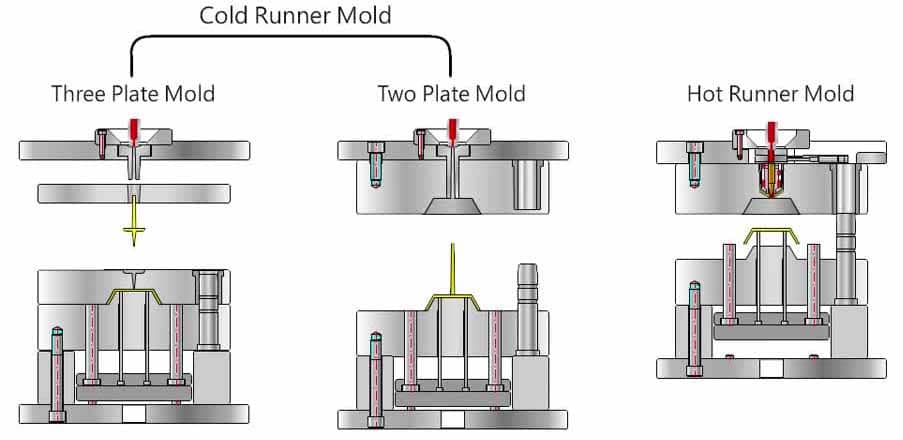
Think of it as a very hot oven, but for plastic instead of pizza.
Slowly but surely, these solid little bits turn into a wonderful, molten goo.
"It's like plastic soup, ready for dipping!"
This isn't just any soup; it's a precisely heated, perfectly fluid plastic concoction.
The consistency needs to be just right, not too thick, not too runny.
It's a fine art, really, getting that plastic into its prime pouring condition.
The Pin's Blueprint: The Mold
Now, for the really clever bit: the mold itself.
Imagine the most intricate, perfect cookie cutter you’ve ever seen.
But instead of cutting out a shape, it creates the shape from liquid.
These molds are often made from strong metal, like steel.
They are carved with incredible precision, forming the exact negative space of our desired pin.
Every curve, every tiny ridge, every minuscule detail is accounted for.
Sometimes, a single mold can create not just one pin, but dozens, even hundreds, at once.
Picture a giant, metallic honeycomb, each cell waiting for its plastic payload.
It's an amazing piece of engineering, often hidden from our curious eyes.
The Grand Injection
This is where the magic truly begins to sparkle, literally.
Our hot, gooey plastic is now ready for its grand entrance.
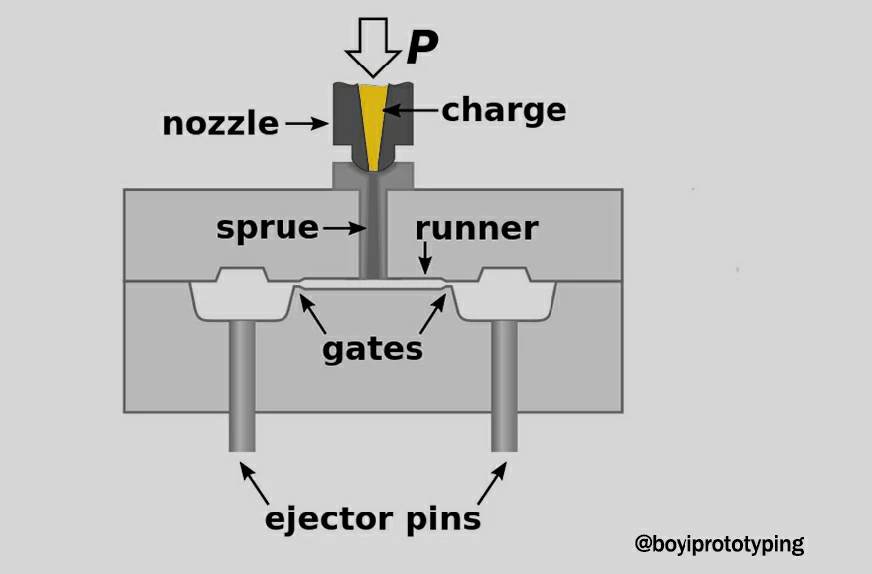
It's pushed into the mold with a surprising amount of force.
Think of it like an industrial-strength squirt gun, but for molten plastic.
The pressure is immense, ensuring that the plastic fills every single nook and cranny.
No detail is missed, no tiny corner left empty.
The plastic rushes into the mold, flowing through tiny channels.
It’s a rapid-fire injection, happening in mere seconds.
This swift motion ensures a perfectly dense, bubble-free pin.
The mold is clamped shut with tremendous power, holding everything in place.
This prevents any of that precious plastic from leaking out.
It's a very tight embrace, a critical step for a flawless finish.

Cooling Down and Popping Out
Once injected, the plastic doesn't stay molten for long.
The mold itself is designed to cool down the plastic almost instantly.
Often, cool water or oil circulates through channels within the mold.
This rapid cooling is essential for solidifying the plastic quickly.
In just a few moments, what was once liquid goo becomes a solid, sturdy pin.
It's a spectacular transformation, happening right before... well, an automated system's eyes.
Once cooled, the mold opens up with a satisfying mechanical sigh.
And there it is! A perfectly formed, shiny plastic pin.
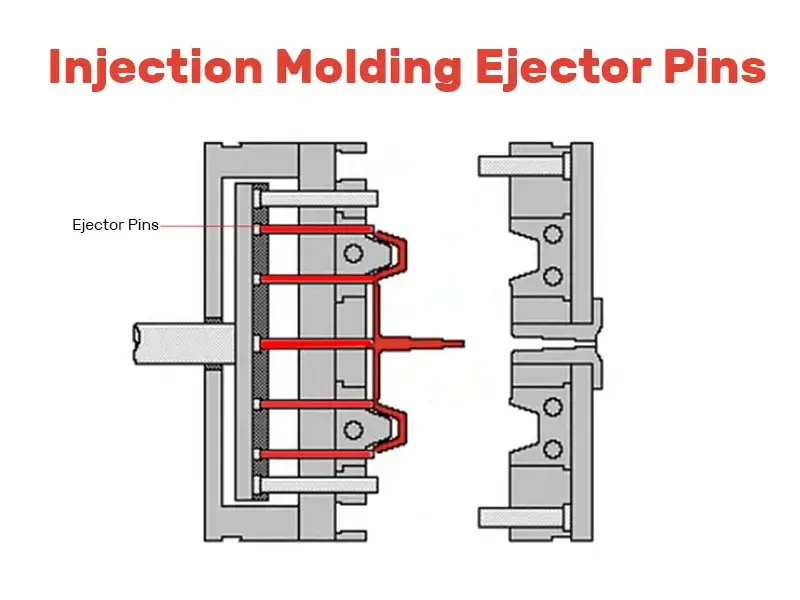
It often just pops right out, sometimes helped by tiny ejector pins.
"Voila! A pin is born, ready for its big adventure."
These ejector pins are like little mechanical fingers, gently nudging the finished product free.
It's a delicate dance, ensuring the pin comes out undamaged and pristine.
Sometimes, they fall into a collection bin, ready for their next step.
The Finishing Touches
Occasionally, there might be a tiny bit of excess plastic.
This is called "flash," and it's easily trimmed away.
It's like tidying up the edges of a newly baked cookie.
Our perfect pins might then undergo a quick inspection.
Automated systems or keen human eyes check for any imperfections.
Only the best of the best make it to our clothes and products.
The Unsung Hero
So, the next time you see a tiny plastic pin, don't just dismiss it.
Remember the incredible journey it took, from humble pellets to perfect form.
It's a testament to ingenuity, pressure, and clever cooling.
That little pin isn't just a piece of plastic; it's a miniature engineering marvel.
It’s a product of precision, heat, and surprising force.
And frankly, my unpopular opinion is that we should all give a little nod of appreciation to these unsung heroes of the everyday.
They hold our world together, one tiny plastic pin at a time.
So next time you encounter one, give it a tiny, imaginary cheer.
Because that, my friends, is how you mold a plastic pin!